From AI to CRA: The trends shaping the future of embedded development at embedded world 2026
- By Jakob Ågren
- 7 min read
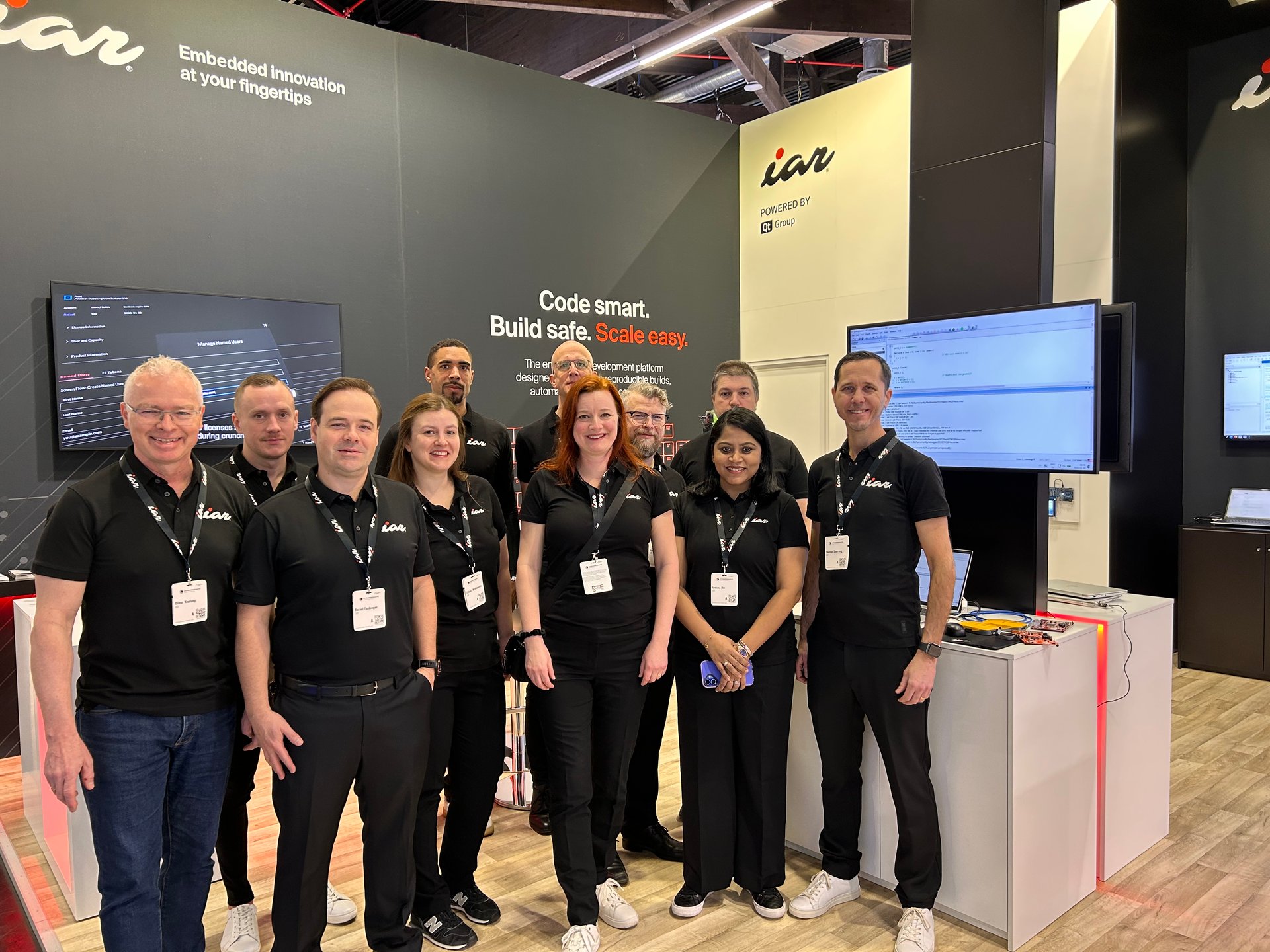
Embedded systems are entering a new phase. What I’ve been seeing and increasingly feeling is how the combination of edge AI, stricter security regulations, modern software workflows, and platform-based development is reshaping how embedded software is designed, built, and maintained.
At embedded world 2026 in Nuremberg, these changes were impossible to miss. Walking through the halls, attending conference sessions, and speaking with developers, partners, and technology leaders from around the world, I got the impression that the pace of change is accelerating.
What stood out this year was not just individual technologies, but how several forces are converging at the same time, AI at the edge, AI-assisted development, the Cyber Resilience Act (CRA), and the growing demand for modern development workflows.
Together, these trends are reshaping how embedded software is built, deployed, and maintained across the long lifecycles typical of embedded systems.
Here are some of the key signals from this year’s event.
Edge AI is pushing embedded toolchains to their limits
Artificial intelligence was everywhere at embedded world this year, but the most interesting discussions were not about cloud AI, they were about running AI directly on embedded devices.
While the concept itself is not new, I clearly saw that adoption is accelerating. Developers across industries, from industrial automation to medical devices and automotive are increasingly deploying machine learning models on microcontrollers and other resource-constrained processors. Edge AI offers clear advantages such as lower latency, improved privacy, and reduced reliance on cloud connectivity.
However, it also exposes a critical challenge.
Running AI models on constrained hardware requires extremely efficient software. Compiler optimization, memory usage, debugging visibility, and performance tuning become decisive factors in determining whether these applications can run reliably on embedded targets.
In many discussions, developers emphasized that the toolchain itself has become a key enabler for practical edge AI.
AI-assisted development is part of the embedded workflow
While AI at the edge attracted much of the attention, another shift is equally visible: AI is assisting the development process itself.
Many conversations during the event focused on how AI tools support developers across the workflow, from code generation and documentation to debugging suggestions and test creation. What once felt experimental is now, from what I saw, entering everyday development environments.
At the same time, AI-generated output does not replace solid engineering practices. Building, testing, verifying code quality, and debugging remain essential, particularly in embedded systems where reliability, safety, and security are critical.
AI-assisted tools can accelerate repetitive tasks, but engineers still rely on robust development environments to ensure that the resulting software behaves reliably on real hardware.
Developers are embracing modern workflows
Another clear shift at the event was the growing adoption of modern development workflows in the embedded community.
For years, embedded development followed its own tooling patterns. What I saw this year is that developers increasingly expect environments that integrate with modern software practices, such as:
- VS Code–based development environments
- CI/CD pipelines
- native CMake support
- automated testing frameworks
- containerized build environments
Containerization is gaining particular traction because it enables reproducible development environments that behave consistently across machines, teams, and development stages.
These approaches help embedded teams scale development across distributed organizations while improving collaboration and reliability.
The Cyber Resilience Act is reshaping development practices
Another topic that surfaced repeatedly across the show floor was the Cyber Resilience Act (CRA) and its impact on development organizations.
CRA is no longer a distant regulatory discussion. It is the requirement for companies building connected devices. As a result, many organizations are shifting from understanding the regulation to implementing development practices that align with it.
Security can no longer be treated as a final validation step. Instead, it must be integrated into the development lifecycle from the beginning.
This is accelerating the adoption of secure development pipelines, where automated testing, vulnerability checks, traceability, and documentation become part of everyday workflows.
CRA also highlights a reality unique to embedded systems: long product lifecycles. Many devices remain in the field for ten or even fifteen years, requiring stable toolchains, predictable updates, and long-term support strategies to maintain software securely over time.
Platform ecosystems are becoming the new foundation
Another clear shift is the growing importance of platform ecosystems.
Embedded development is increasingly built around integrated platforms that combine:
- toolchains
- RTOS support
- security capabilities
- CI/CD integration
- partner silicon, software integrations, and ecosystems
Rather than assembling numerous standalone tools, I saw that many teams now look for solutions that provide a cohesive development environment across the entire workflow.
This reflects the growing complexity of embedded systems, particularly in industries such as automotive, industrial automation, and medical devices.
From a tooling perspective, development is moving beyond isolated compilers or debuggers toward platforms that integrate build tools, debugging, automation, and security capabilities. These environments simplify integration with modern workflows and support increasingly heterogeneous systems across multiple architectures.
Strong engagement at the IAR conference sessions
The conference program running alongside the exhibition provided valuable insights into many of these trends. From the IAR side, we saw strong engagement in our two presentations.
Felipe Torrezan presented “From Regret to Reproducibility: Why Embedded Workflows Belong in Containers,” demonstrating how containerized environments help teams achieve reproducible builds and scalable CI/CD pipelines.
Dr. Marc Thomas followed with “Secure By Default: DevSecOps Workflows for CRA-ready Embedded Systems,” highlighting how development teams can integrate security checks and compliance processes directly into their pipelines.
Both sessions sparked lively discussions with developers exploring ways to modernize their workflows while preparing for emerging regulatory requirements.
Looking ahead
The embedded world 2026 reinforced a clear message: embedded development is evolving rapidly.
Edge AI is bringing intelligence closer to devices. Security regulations are reshaping development pipelines. AI is assisting engineers throughout the development process. And modern workflows are enabling teams to work more efficiently than ever before. What stood out to me most is how interconnected these trends are.
As embedded systems grow more complex and connected, the tools, workflows, and platforms that support development will play a central role in enabling the next generation of intelligent, secure, and reliable devices.
What’s next
To better manage your development journey and overcome growing challenges in embedded systems, discover how IAR can support your team, or book a demo today.