Automotive
Stanford Solar Car Project and IAR
With IAR as a core development platform, the Stanford Solar Car Project builds highly reliable embedded systems designed for real-time data processing and extreme racing conditions.
Overview
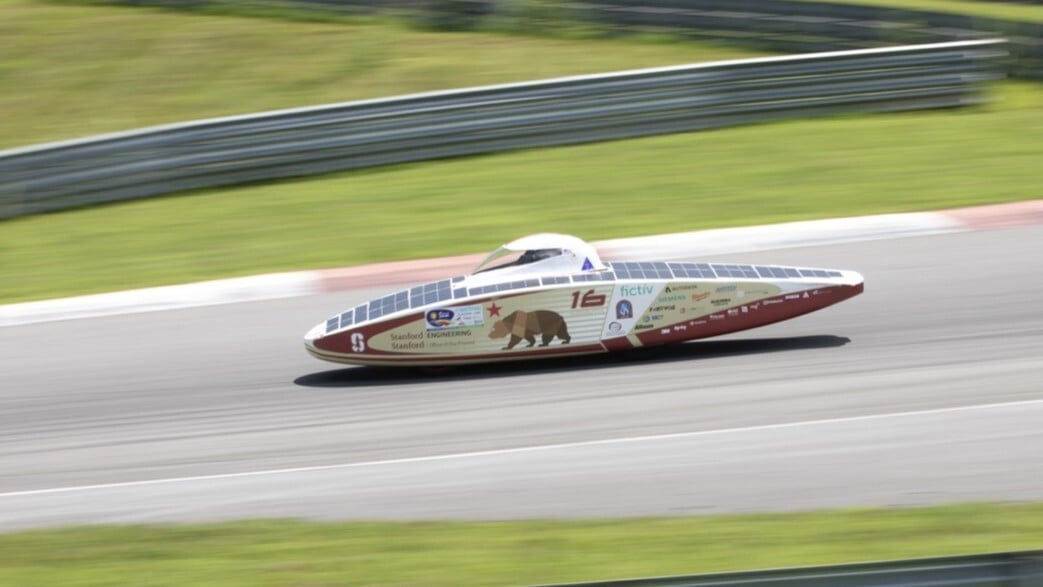
Founded in 1989, the Stanford Solar Car Project (SSCP) is a student-run engineering team that designs, builds, and races a solar-powered vehicle every two years. The team competes against top universities from around the world in the Bridgestone World Solar Challenge, a 3,000-km endurance race across the Australian outback.
For nearly two decades, SSCP has collaborated with IAR, relying on IAR Embedded Workbench as the foundation for its embedded software development. Today, success in the World Solar Challenge requires not only aerodynamic performance and battery efficiency, but also real-time data processing, intelligent embedded systems, and uncompromising system reliability.
Challenges
Modern solar racing is driven by data.
The Stanford Solar Car integrates high-density sensor networks throughout the vehicle, continuously monitoring battery voltages, cell temperatures, pack current, and system health. This data is processed onboard and combined with cloud-based inputs such as solar irradiance forecasts, weather models, and simulation outputs to inform optimal race strategy.
To remain competitive, the team must:
-
Aggregate and process large volumes of sensor data
-
Maintain deterministic control of safety-critical systems
-
Ensure reliable communication across CAN, SPI, and Ethernet
-
Balance onboard computation with cloud-based strategy models
Over recent development cycles, SSCP transitioned from a distributed multi-board design to a more centralized vehicle computer. This increased software complexity and tightened subsystem dependencies. Higher sensor density also added pressure on task scheduling, bus utilization, and system responsiveness.
“At this point, you’re not just building a car, you’re building a real-time data platform,” explains Anthony Chukhlov, Code Lead for SSCP. “To compete, we need extremely high-quality and high-performing embedded software. Reliability becomes critical when you’re combining sensor integration, network communication, and strategic computation.”
The battery management system (BMS) is one of the most safety-critical components. It requires precise monitoring of cell voltages, temperatures, currents, and isolation conditions, along with immediate, deterministic fault response. Extreme conditions in the Australian outback leave no room for software instability.
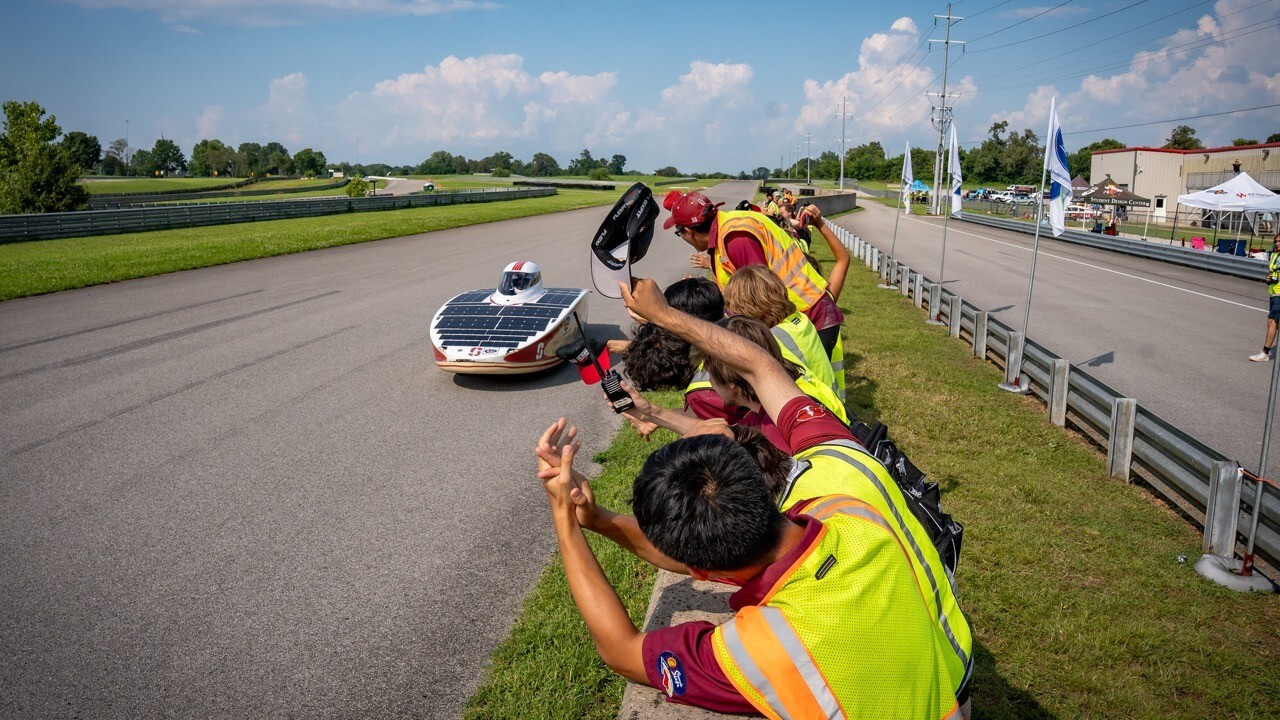
Frequent student turnover and a compressed two-year development cycle further challenge the team, requiring new engineers to quickly understand, debug, and work on a complex multi-board system without introducing risk.
Solution
SSCP relies on IAR Embedded Workbench, a core part of the IAR Embedded Development Platform, to develop and manage the vehicle’s embedded systems across STM32 microcontrollers. IAR enables a consistent, scalable development environment that supports high-quality, reliable, and high-performing embedded software across the entire system.
The software architecture combines FreeRTOS, third-party libraries, and in-house drivers for CAN, SPI, and Ethernet, along with board-specific control logic. Sensor data is aggregated into a centralized vehicle computer, where RTOS tasks handle filtering, state estimation, and strategy-related computation.
As the architecture consolidated, maintaining a structured, navigable codebase became essential. IAR Embedded Workbench provides a unified environment across all boards, avoiding fragmented workflows and enabling modular project organization, library integration, source navigation, and multi-board debugging.
“The ability to quickly analyze source code and trace behavior across modules is instrumental in maintaining high-quality and reliable software throughout our development process,” says Anthony Chukhlov. “The integration with STM32 devices is seamless, which allows us to focus on innovation rather than tooling friction.”
The BMS continuously monitors the system and reacts immediately if limits are exceeded, protecting both the battery pack and the driver. IAR Embedded Workbench’s real-time visibility allows engineers to validate this safety logic and confirm consistent, reliable operation.
Beyond the vehicle, SSCP uses laboratory validation systems and MCU-based test benches that run the same firmware architecture. Using the same toolchain, build configuration, and debugging workflow ensures consistent performance from early validation through full system integration.
Benefits
By standardizing on IAR, SSCP maintains a consistent, scalable workflow across the engineering lifecycle, while ensuring high-quality, robust, and reliable embedded software, optimized for code size and performance. Key benefits include:
-
Consistent toolchain across lab and vehicle for repeatable builds
-
Lower integration risk, with lab-tested behavior carried over
-
Clear system visibility to trace RTOS tasks, communication, and safety logic
-
Deterministic control for safety-critical subsystems
-
Faster onboarding so new engineers can contribute quickly
This workflow lets the team manage increasing software complexity while preserving reliability, even with frequent turnover and tight development cycles.
Driving Innovation in Solar-Powered Mobility
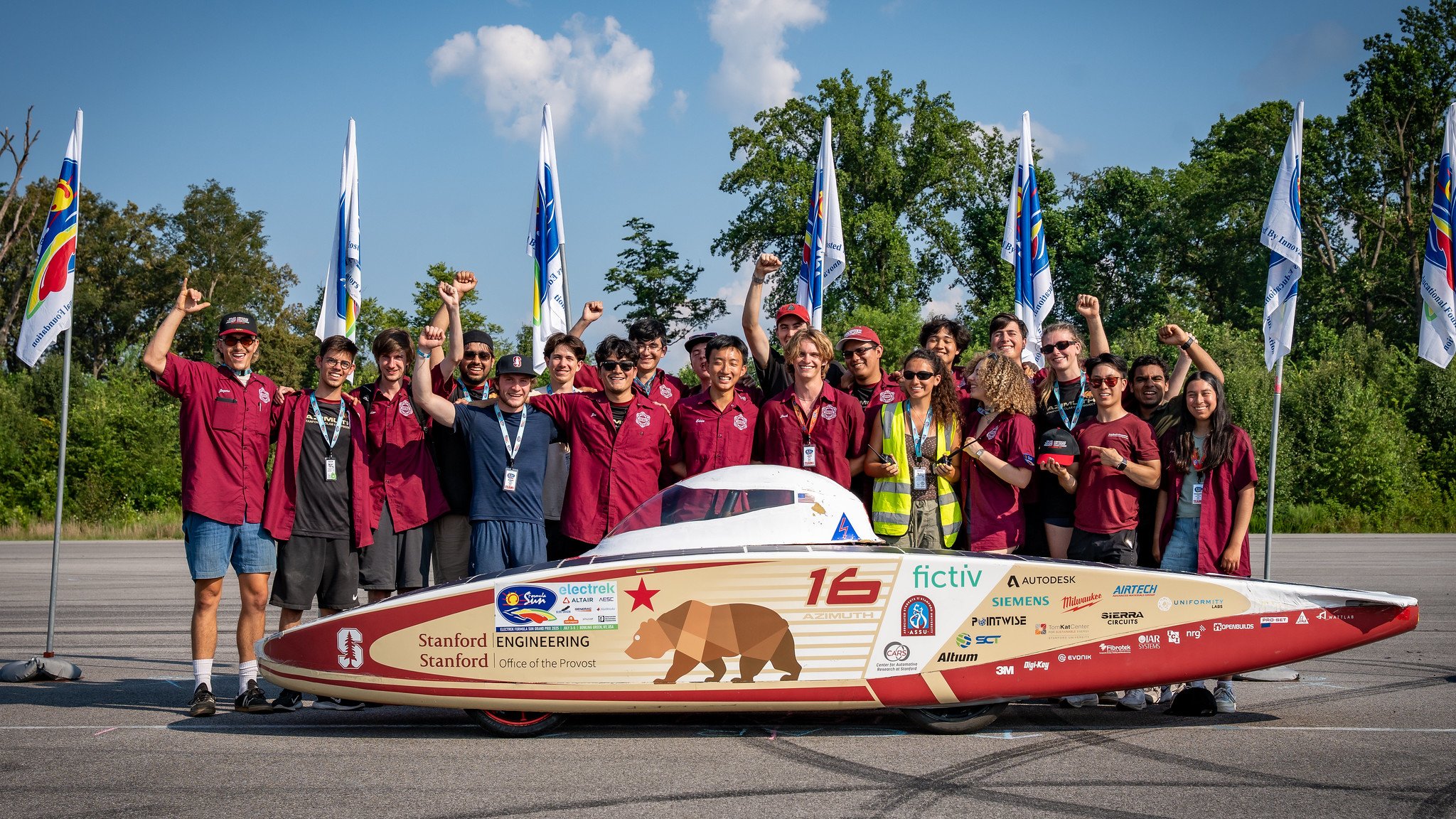
As solar racing becomes increasingly data-driven, success depends on combining advanced aerodynamics, energy efficiency, and intelligent embedded software. With IAR as a core development platform, SSCP builds highly reliable embedded systems designed for extreme conditions, treating the vehicle not just as a mechanical and electrical system, but as an integrated, real-time computing platform.
Through the ingenuity of the team and collaboration with industry leaders like IAR, the team continues to advance solar vehicle technology and push the boundaries of intelligent electric mobility.